
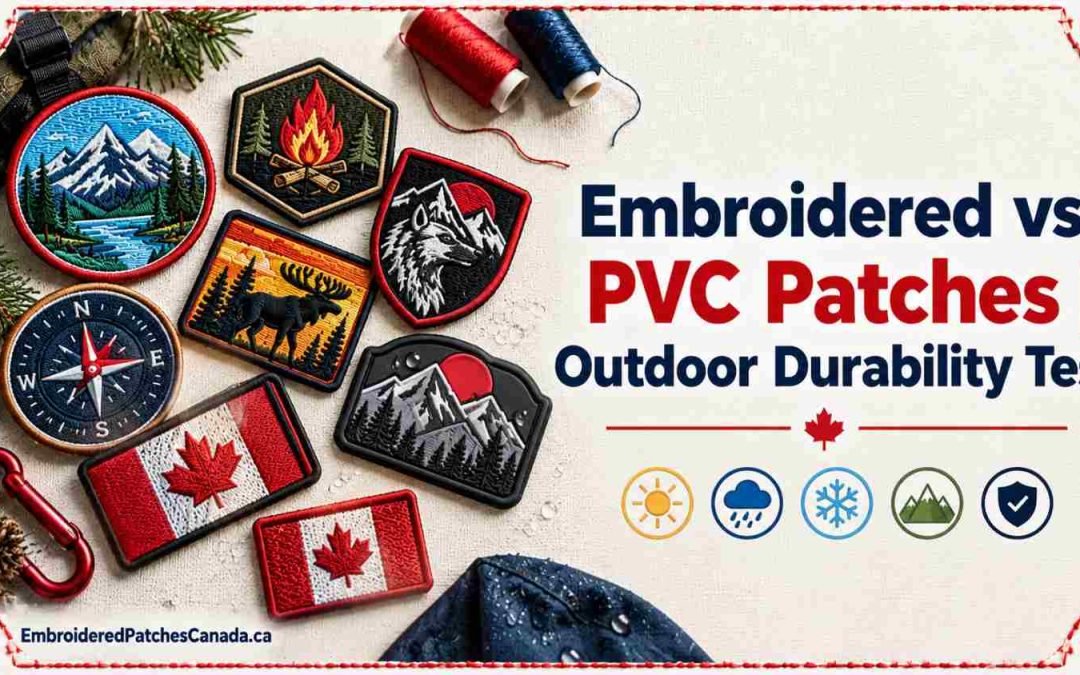
To choose between embroidered vs PVC patches, you need to perform all the tests for durability, flexibility, and longevity. This way, you will know which patch will stay longer in outdoor conditions. Because both thread and rubber react differently in rain, sun, and rough handling.
How Do Embroidered vs PVC Patches Compare on Water, Sun and Abrasion Resistance?
Here is a quick comparison of embroidered patches vs PVC patches, and see which patch stays strong in rain:
Embroidered patches are stitched on a twill base, and they have natural limits in outdoor conditions. If your embroidered patches get wet, it will take some time to dry because threads absorb the moisture. That’s the one reason most patches start fraying or fading when they are exposed to water repeatedly. You might face problems in the rain when you pick embroidery patches.
PVC patches, on the other hand, are moulded from a flexible, rubber-like plastic material, so they naturally provide resistance to water. You dont have to worry about PVC patches getting soaked in water the way thread does. This is the reason that makes PVC patches ideal for tactical and outdoor gear that faces regular mud, rain, and rough conditions.
Embroidered vs PVC Patches: Differ in Look and Feel?
The two materials: embroidered vs PVC patches have entirely different textures and finishes. Embroidered patches come with a raised, stitched surface, and they have visible thread lines. This is what gives them a classic handmade look that feels soft and flexible against fabric. Your uniforms, team jerseys, and casual wear clothing look stunning with custom embroidered patches.
You can see a glossy finish in PVC patches because moulded surface gives them certain fine and more sculpted feel. Whether you like 2D or 3D patch finishes, you get both with personalized PVC patches. Just make sure to pick the right size of rubber patches that stick longer on your jackets, jeans, or hats. If fine detail matters more to you than the classic stitched look, PVC is the stronger starting point. For broader detail limits across patch types generally, see our patch size and stitch count guide.
Which Performs Better for Tactical and Outdoor Use?
Many people want to know which ones, embroidered vs. PVC patches, hold on strong for tactical gear. The short answer would be PVC patches because of their non-porous surface, which sheds mud and dirt rather than absorbing it. The rubber material holds its shape and colour through conditions that would eventually wear down thread. That’s why we recommend PVC patches for tactical vests, outdoor backpacks, and gear that’s washed, rained on, or handled roughly on a regular basis.
Embroidered patches still outperform PVC in everyday, non-extreme outdoor use, like hiking jackets, caps, and bags that see moderate weather rather than constant harsh exposure. For most casual outdoor wear, embroidery holds up fine and offers the classic look people expect from patches.
Embroidered vs PVC Patches: Production Difficulty and Cost?
The upfront cost for embroidered patches is generally low compared to PVC patches. Because the production of stitched patches is pretty straightforward, you need the right colour thread to do the embroidery on a twill fabric.
But PVC patches require a custom mould to achieve their shape, which increases their overall production cost. Also, PVC patches take more time to make because there are multiple steps involved in their making, from creating a mould, choosing the right colour rubber, shaping it, and finishing them. That’s why PVC patches have a higher cost than embroidered patches.
| Feature | Embroidered Patches | PVC Patches |
| Material | Thread stitched on twill | Moulded rubber-like plastic |
| Texture | Raised, stitched, tactile | Glossy, moulded, firmer feel |
| Water resistance | Can absorb moisture | Does not absorb water |
| Fine detail | Limited for very small text | Handles small text and sharp lines well |
| Upfront cost | Lower, no mould needed | Higher, requires custom mould |
| Best attachment | Sew-on | Velcro / hook-and-loop |
Which One to Pick: Embroidered vs PVC Patches
If you are looking for raw outdoor durability, then this comparison between embroidered vs PVC patches shows that PVC patches are the best choice. You get waterproof material and fine details in PVC patches. Embroidered patches work best for classic thread designs and a raised finish.
Ready to create your own PVC or embroidered patches? Check out the best custom patches at EmbroideredPatchesCanada.ca.
Frequently Asked Questions
Are PVC patches waterproof?
PVC is a non-absorbent plastic, so it doesn’t soak up water the way thread does, making it far more resistant to moisture-related wear than embroidery. This is a core reason it’s favoured for tactical and heavy outdoor gear.
Which fades less in the sun?
If you are worried about which one, embroidered vs PVC patches, will get damaged by the sun first, it would surely be PVC patches because the rubber-like material holds the colour pretty well compared to the dyed threads of embroidered patches.
Which is lighter?
Embroidered patches are typically lighter and more flexible, since they’re built from thin layers of thread and fabric. PVC patches are thicker and firmer by design, which adds some weight and rigidity in exchange for added durability.